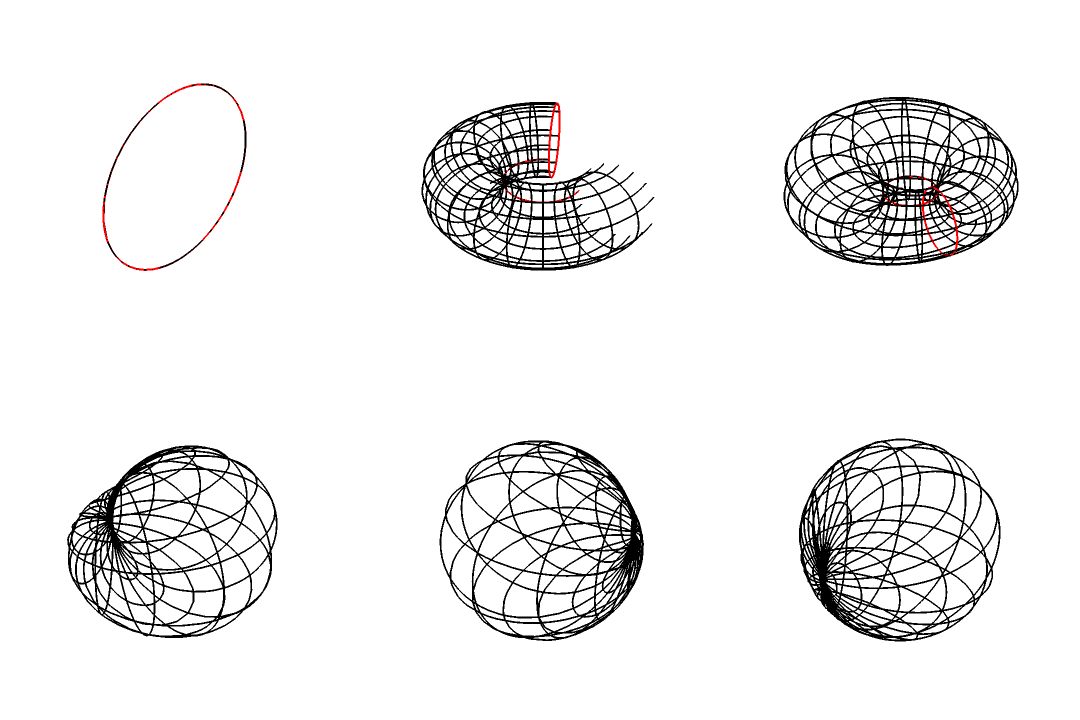
Notation
is an n cell, homeomorphic to the open n disk or or
Construction
- We start from a discrete set (0-cells)
- form the n-skeleton from by attaching -cells via the attaching map
For example we construct from by adding edges (-cells) between discrete points. Each attaching map is (remember that is two points). Here is the boundary of the -cells that will be attached We now have the new space
or more formally
In the end we get
Example
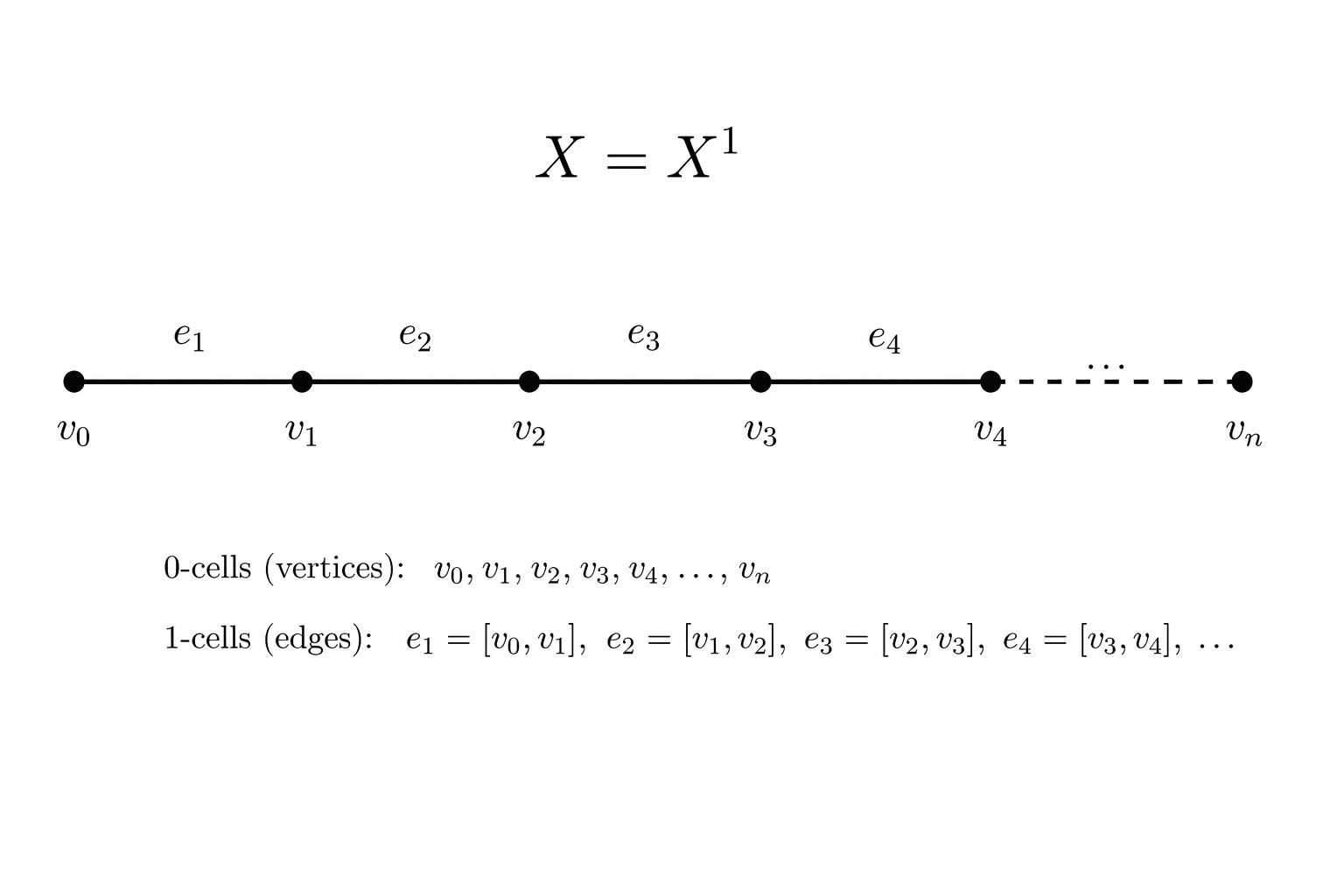
a 1-dimensional cell complex is a graph
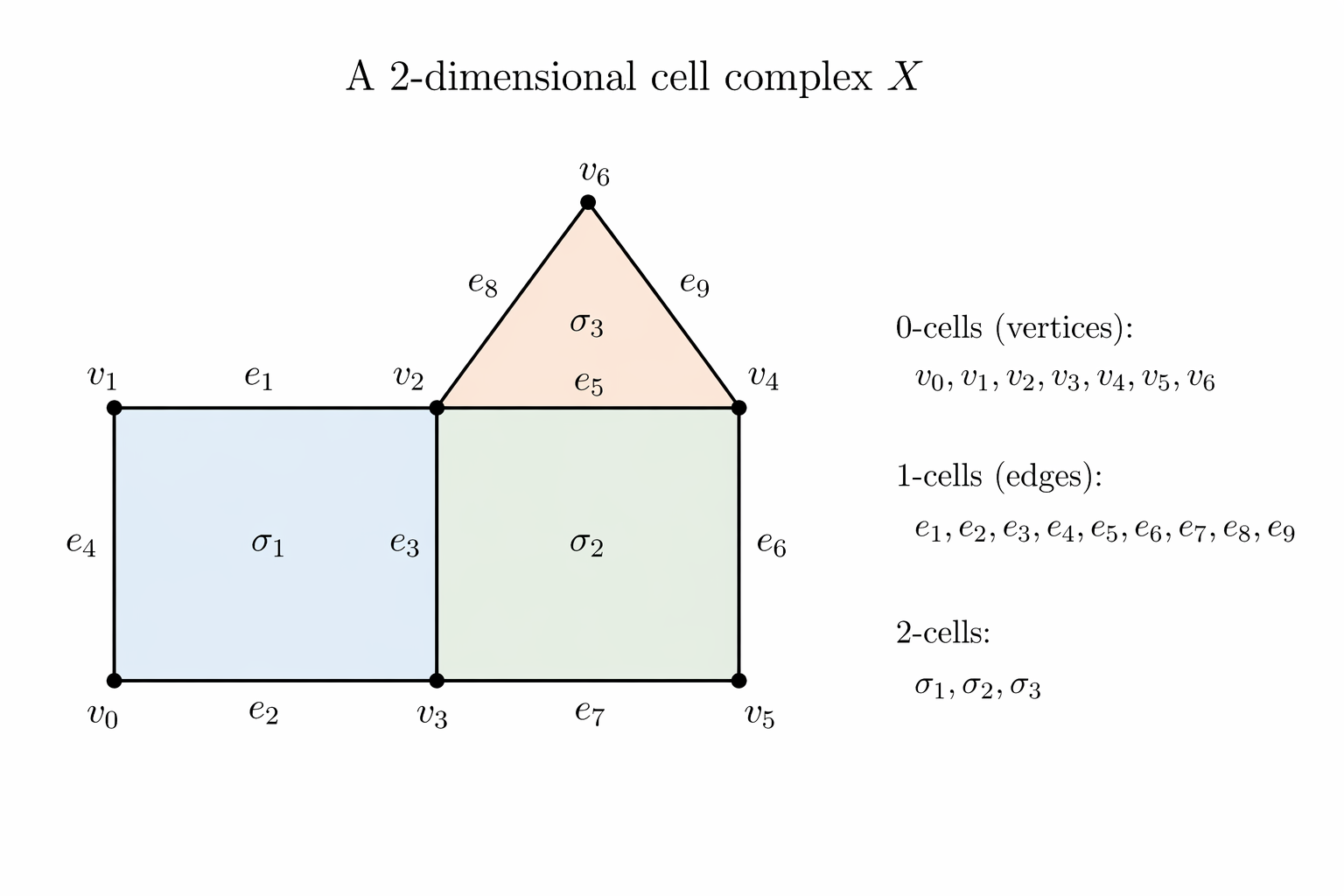
A 2-dimensional cell complex
Real projective n space
defined to be the space of all lines through the origin in We can view this as the quotient space (the sphere with antipodal points identified)
is a Lie group for :
- is the trivial group
- is the unit complex number group under multiplication
- is the group of orientation-preserving 3-dimensional rotations fixing the origin.
characteristic map
This can be seen as a composition of maps
the middle map is the quotient map defining
Subcomplex
A subcomplex of a CW complex is a subspace formed by a collection of cells of such that it is still a complex. This means once you include a cell, you must also include all lower-dimensional cells on which its boundary is attached.
We call a CW pair
Operations
Products
If and are cell complexes, then is also a cell complex, whose cells are exactly the products , where is a cell of and is a cell of .
Warning
The topology on as a cell complex could be finer than the product topology. The two topology coincide if either or has finitely many cells, or both and have countably many cells. We could ignore the difference in most of the cases.
Quotients
Let be a CW pair means collapsing the subcomplex into a single point (a -cell) This single point is also the image of in
Others
The suspension of is obtained by stretching between two new points: a north pole and a south pole. Or stretching into a cylinder and then collapsing both end faces to points. Formally,
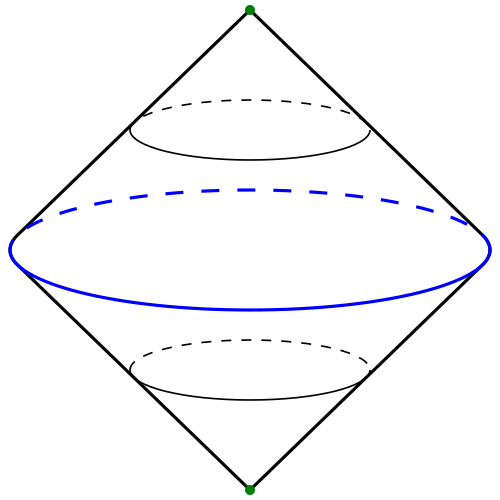
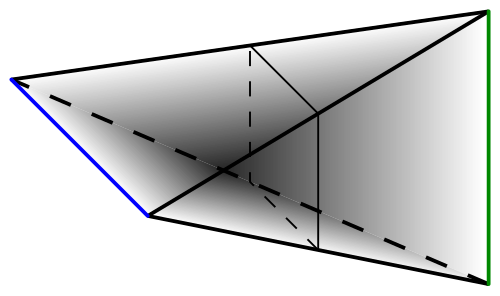
The join connects every point of to every point of by a line segment. Formally,
where
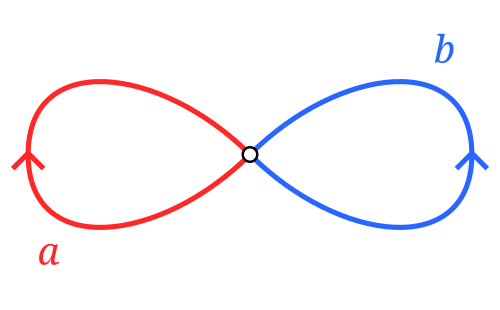
The wedge sum glues two based spaces together at their basepoints:
The smash product is like the product , but we collapse the parts where one coordinate is the basepoint: