10.1 Depth-first search
a) b) d)
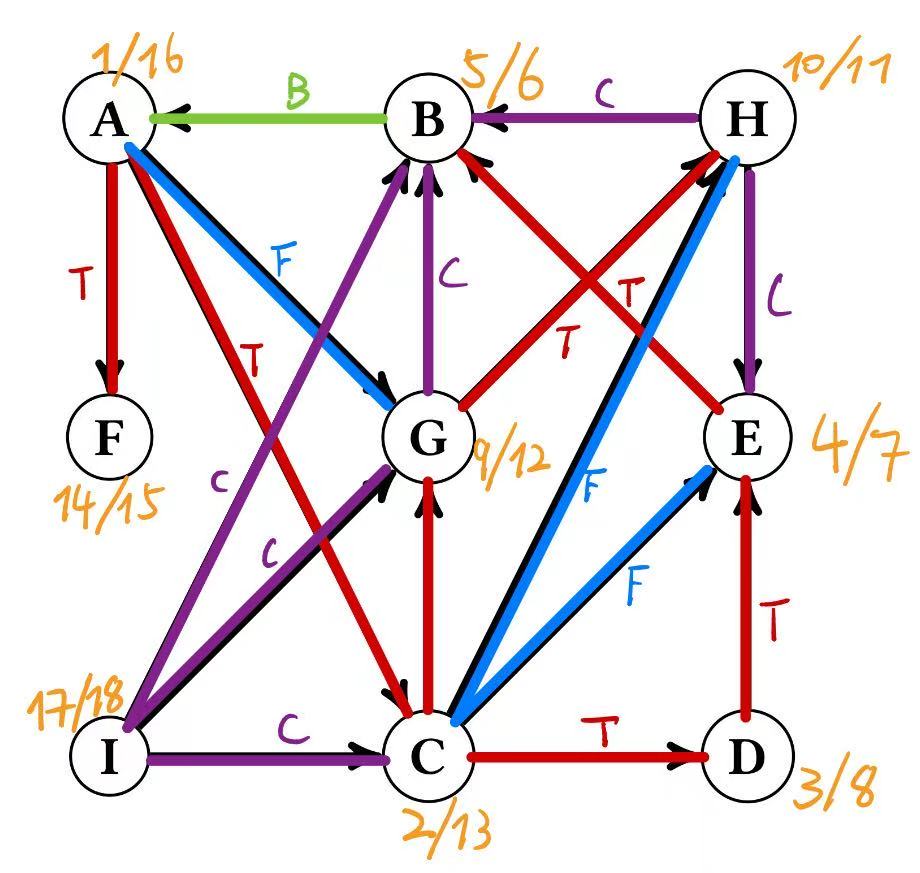
c)
Pre: Post:
e)
No, we can find a cycle by using a backward edge. Let backward connects , there must exists a path from to inside the tree, together with the backward edge, a cycle is formed. In the example above, a backward edge exists, so we can find the cycle
f)
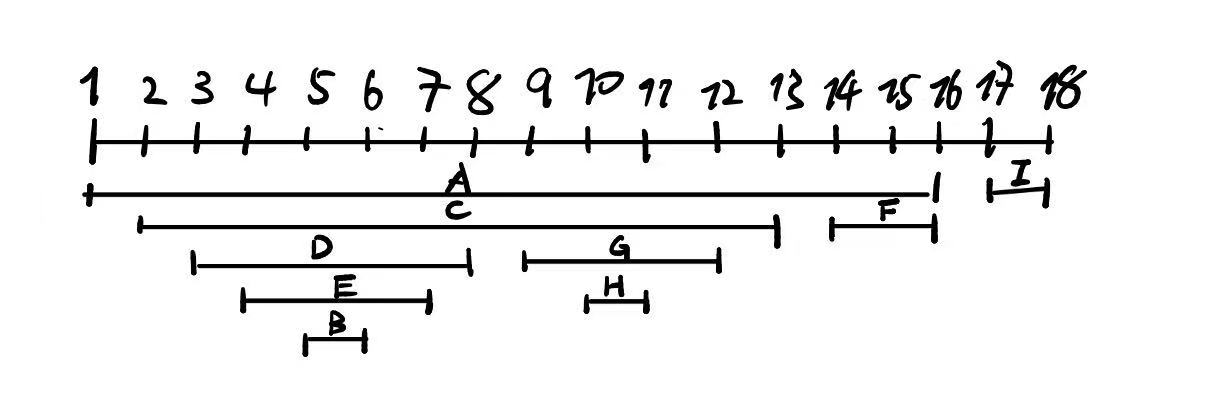 If then there exists a path from to in the DFS-tree
g)
If edge is removed and is added, then: The new pre/post numbers: 14/17 15/16 1/18
Now the graph has a topological ordering: AFICGHDEB If we sort the vertices by pre-number, we do not get a topological sorting
10.2 Breadth-First Search
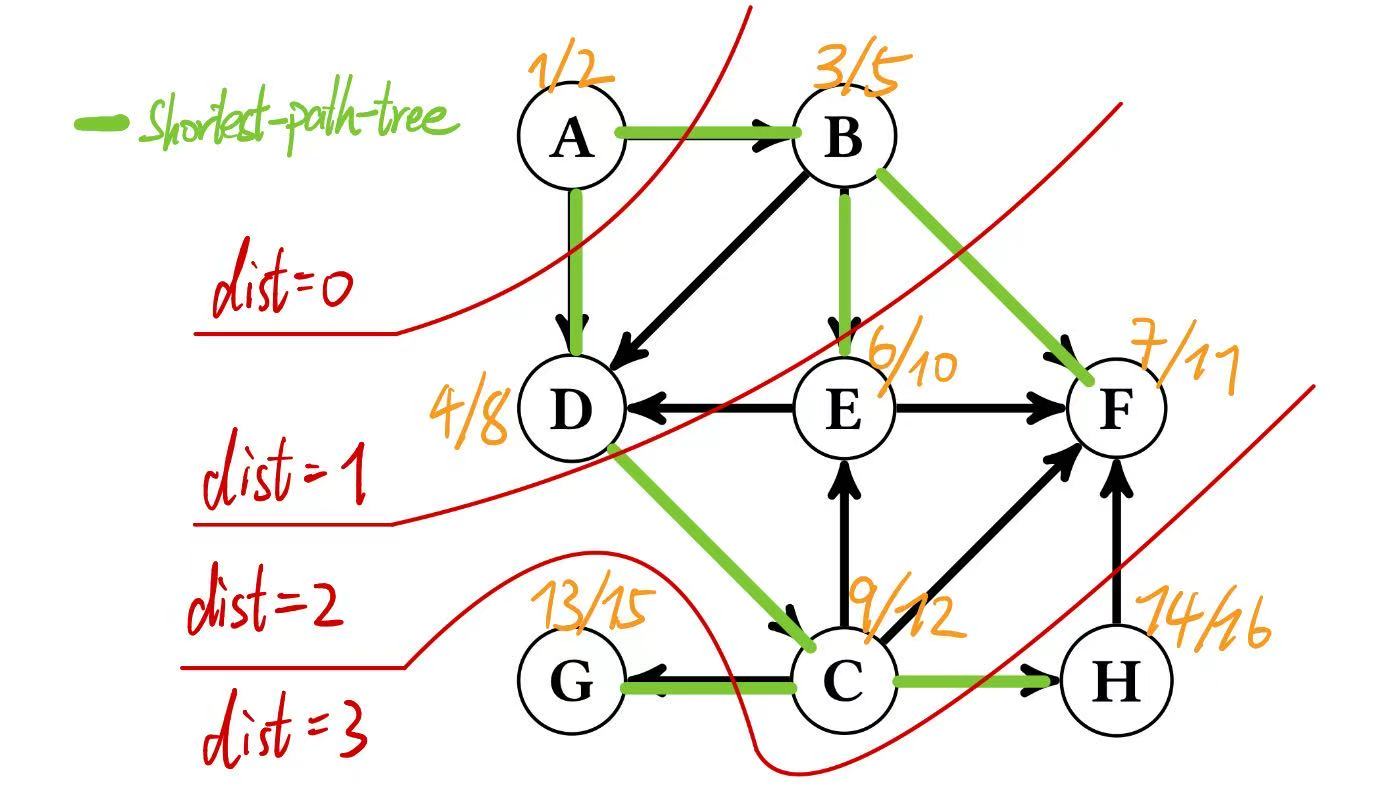
a)
b) c) d)
10.5 Strongly connected vertices
Use a DFS. While running DFS, look for a back edge. Any back edge with an ancestor of immediately gives a strongly connected pair
status[1...n]=-1 //-1:unvisited 0:in stack 1:visted

function DFS(u):
 status[u] = 0
 for each v in Adj[u] do
 if status[v] = -1 then
 pair = DFS(v)
 if pair ≠ null then
 return pair
 else if status[v] = 0 then // found back edge v -> u
 return (u, v)
 status[u] = 1
 return null

// main
for v = 1 to n do
 if status[v] = -1 then
 pair = DFS(v)
 if pair ≠ null then
 output pair
 halt
output "no such pair exists"