Why exists?
Important
Whenever there is no conflict of interest between parties, we need no contract. Cheap talk is enough
NOTE
A contract consists of background legal rules + written contract
Sequential vs. Spot Transaction
- Spot transaction: Exchange is completed essentially at one point in time; obligations are settled immediately.
- In another word: “cheap talk”
- buying food
- Sequential transaction: Performance and obligations extend over time.
- A warranty creates a sequential element because the seller may still have obligations after the sale.
Example
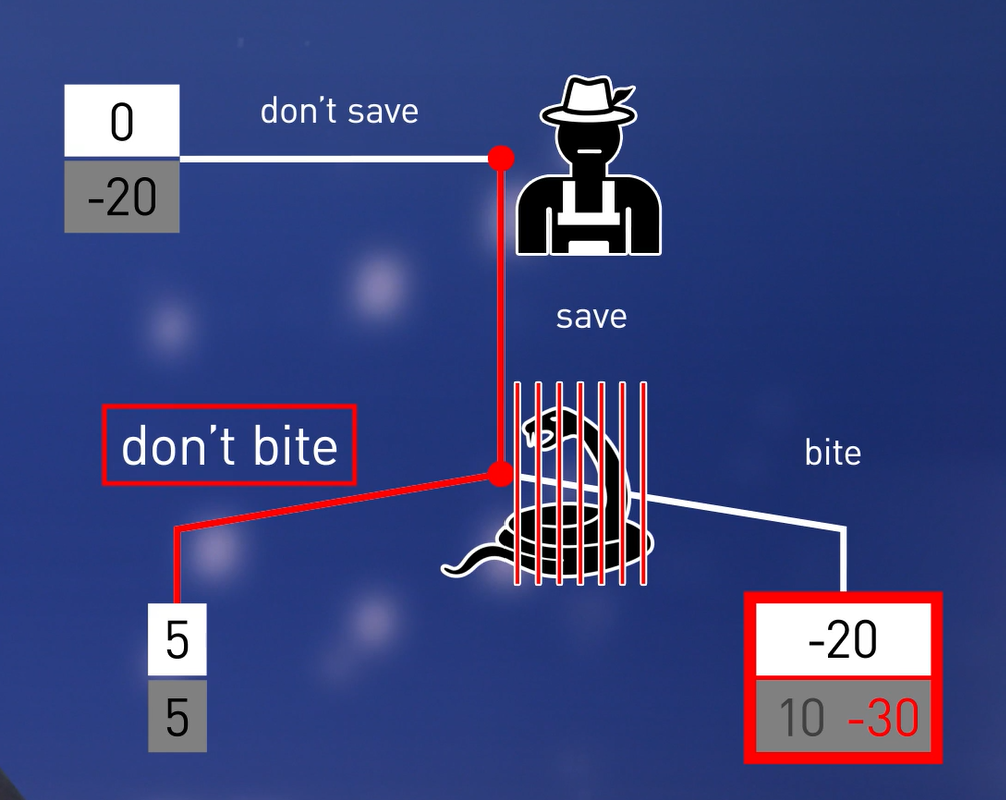
The Farmer and the Viper
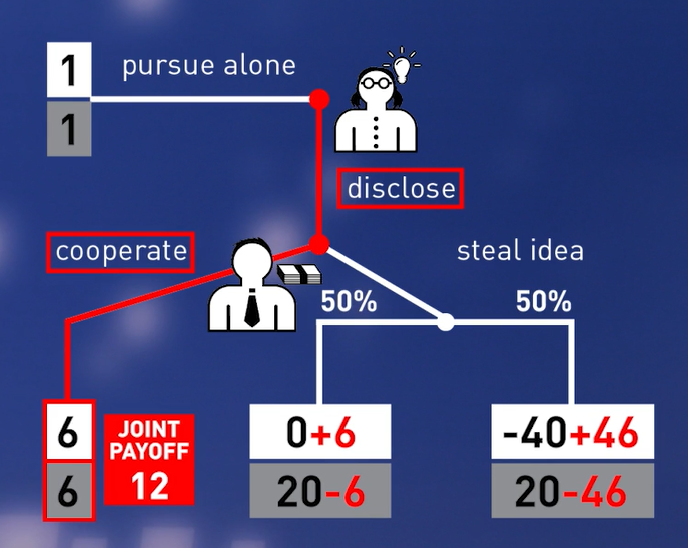
VC vs. Inventor
Ex-Ante vs. Ex-Post View
- Ex-ante: Evaluates a decision before the outcome is known, based on expectations, risks, and available information.
- Ex-post: Evaluates the decision after the outcome is known, using the actual consequences.
Penalty Clause
- Correct perspective: Evaluate a penalty/liquidated damages clause ex ante, based on the risks known when the contract was made.
- Problem: Courts often see only the ex post outcome. If only a mild loss occurred, catastrophic risks considered during drafting are invisible counterfactuals.
- This can make a reasonable liquidated damages clause appear overcompensatory or punitive.
How do parties commit?
- Moral force of promises/ Taboos
- Reputation/ Kinship(亲属关系)
- Formal enforcement/ Governance Systems and Institutions
- Technical solutions
Why do state enforce contracts?
- economic growth
- specialization (division of labor)
Damages
Liquidated Damages vs. Expectation Damages
- Expectation damages: Compensation calculated after breach to put the non-breaching party in the position they would have been in if the contract had been performed.
- Liquidated damages: Damages agreed in advance in the contract, usually as a fixed amount or formula.
Key idea: Liquidated damages are often a pre-agreed estimate of expectation damages.
Liquidated damages → mainly ex-ante.
Expectation damages → mainly ex-post.
Challenges
Contract design has two problems:
- Economic: choose mechanisms that reduce transaction costs and support efficient cooperation.
- Legal: draft them so courts are likely to interpret and enforce them as intended. Courts may reinterpret or invalidate clauses, e.g. for unconscionability or public policy.