Definition
To specify a type, we need:
- Formation rule
- Constructors (introduction rules)
- Eliminators (elimination rules)
- Computation rule (β-reduction)
- optional uniqueness principle (η-expansion)
Formation rule
A formation rule tells you when a type is well-formed, .. when you are allowed to form a new type expression.
Constructors
how to construct elements of that type
Eliminators
An eliminator is the canonical principle for using (eliminating) values of a type
The eliminator states the elimination principle by giving a term with a specific type
.. defining functions out of that type by analyzing how the value could have been constructed.
There are two common forms:
Non-dependent eliminator (recursor)
it defines a function into a constant target type.
Comment
What a bad name!, a recursor is not recursive
defines a plain function:
where does not depend on the input
Dependent eliminator (induction)
Defines a dependent function (Π-types (Dependent function types)):
where type depend on .
Computation rule
how an eliminator acts on a constructor
The computation rule (β-rule) states how that recursor reduces/evaluates when you apply it to a constructor.
Examples
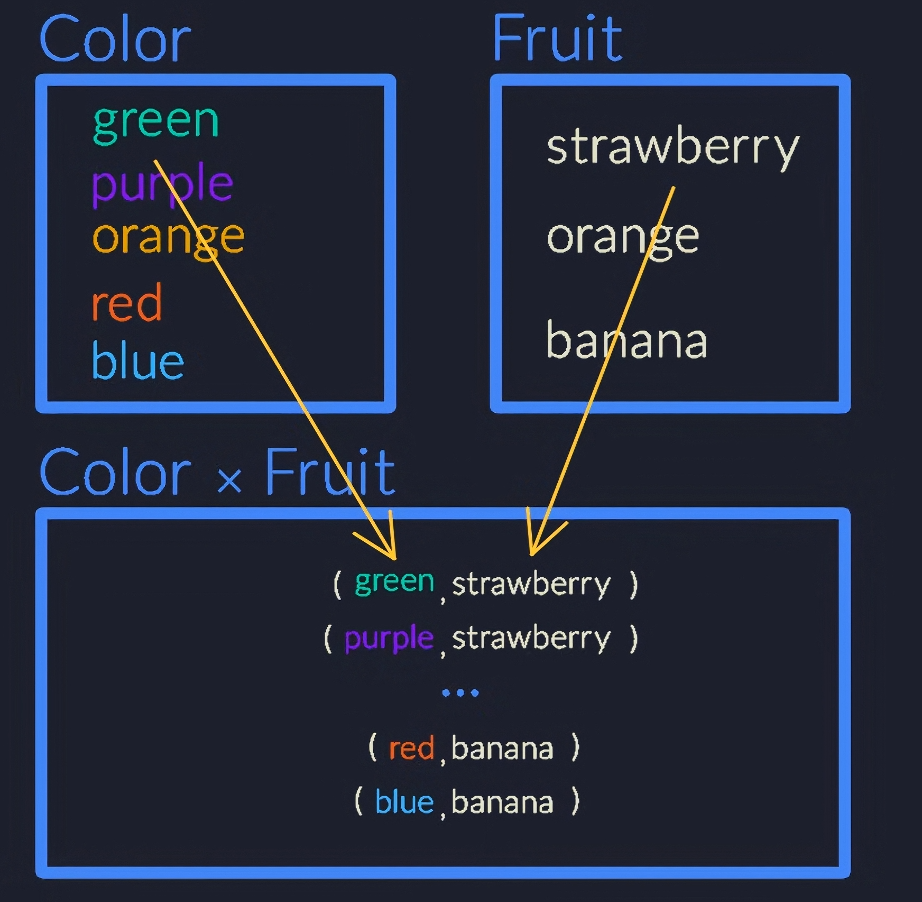
Example: Product type A×B
Formation rule: If and , then
Constructor: If and , then
or the constructor is pairing:
Eliminator (recursor):
Meaning: we choose a result type we give a rule telling how to produce a from components and , then is the function
Computation rule (β):
We can define special cases:
- with computation rule
- with computation rule
Uniqueness:
NOTE
actually we could define Note that could be constructed as an indexed one over the two-element type 2
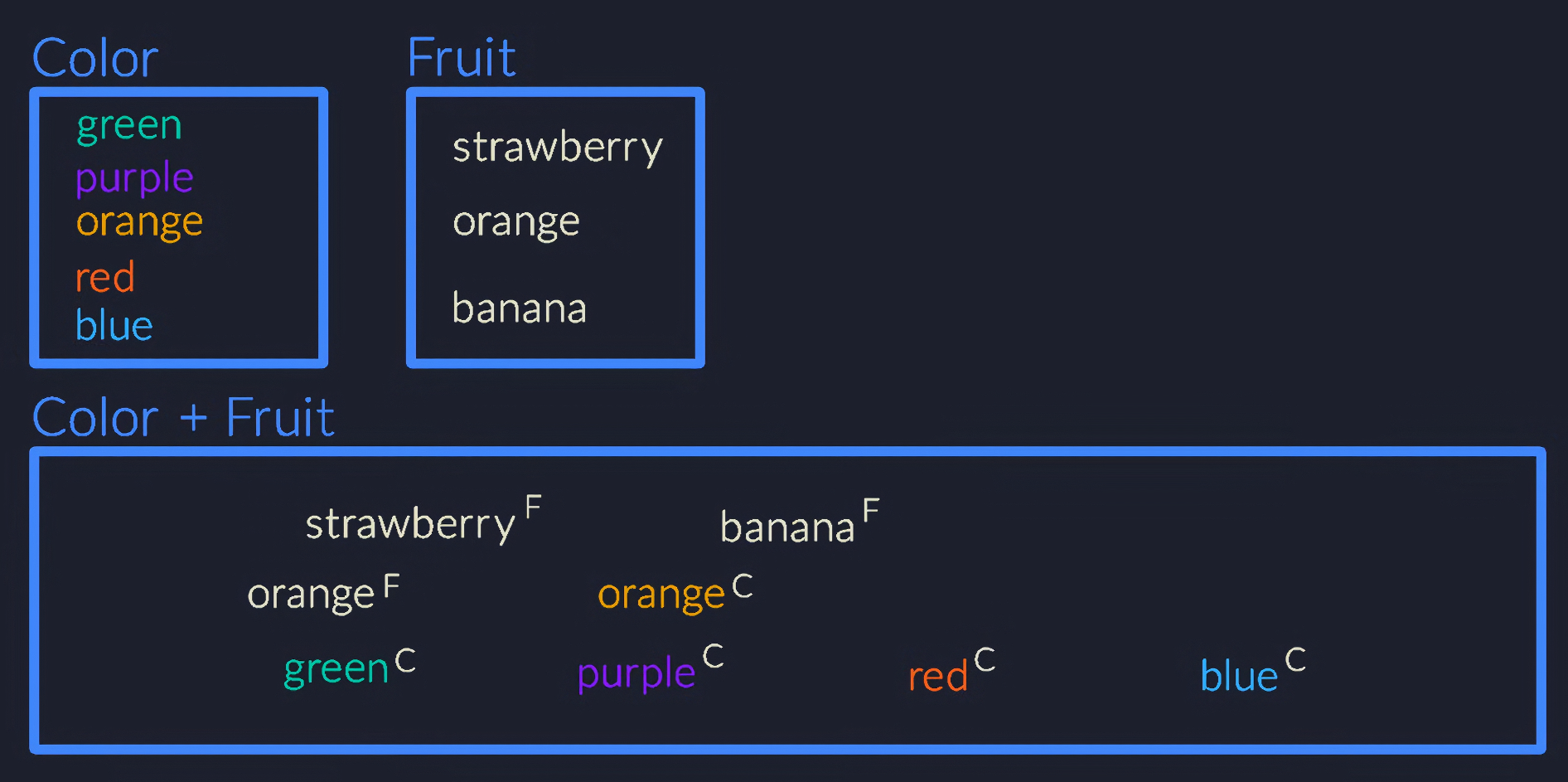
Example: Coproduct type A+B
Formation rule: If and , then
Constructors:
Eliminator (recursor):
Computation rules (β):
NOTE
actually we could define Note that could be constructed as an indexed one over the two-element type 2
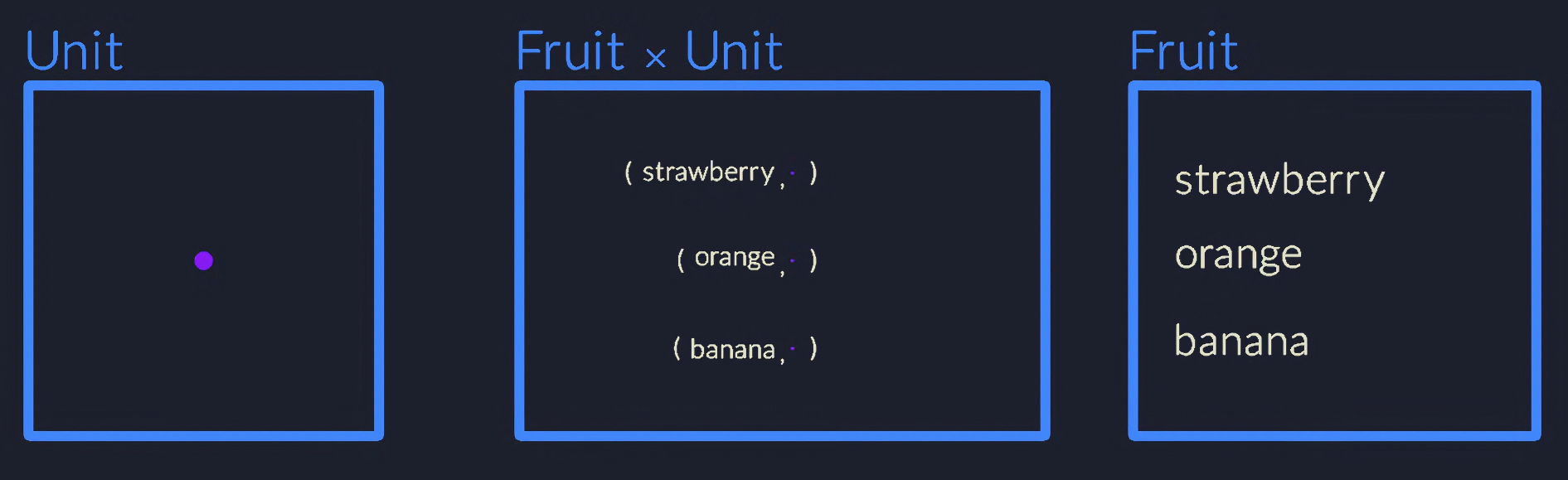
Example: Unit type 1
Formation rule:
Constructor (introduction rule):
Eliminator (recursor):
Induction: This means, if you have a family , to produce it suffices to give
Computation rule (β-rule):
prove the propositional uniqueness principle for 1
Step 1: Define family by so a term of is exactly a term of
Step 2: Induction for the unit type says: so it suffices to give a term of
Step 3: base case Compute: and we always have
Step 4: we define
check:
- for any ,
- by computation rule
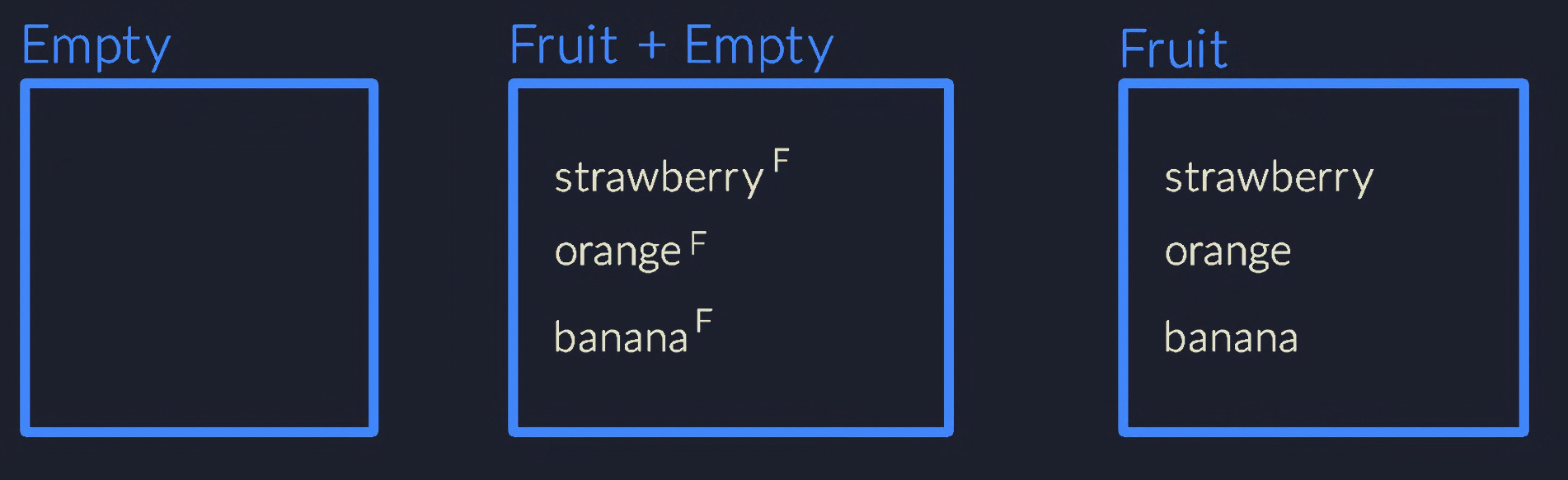
Example: Empty type 0
Formation rule:
Constructor: (none)
Eliminator (recursor / ex falso):
Computation rule:
(none)
Example: Natural numbers N
Formation rule:
Constructors:
Eliminator (recursor / primitive recursion):
Computation rules (β):
Example: Lists List(A)
Formation rule: If , then
Constructors:
Eliminator (recursor / fold):
Computation rules (β):
Other examples
Similarly we can also define types like , or
Propositions
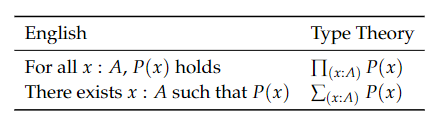
We treat propositions as types and the evidence (proofs) as elements of this type.
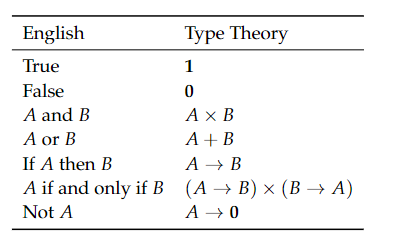
means: we can find a function such that it matches all elements of to elements of . For every proof of we can find a proof of . Case 1: if is true there is a proof of there is a proof of is true Case 2: if is false it is easy to define a function from to , (any mapping would do the job, since the function is never called) is true
We see (type theory) and (first order logic) are equivalent.