Overview
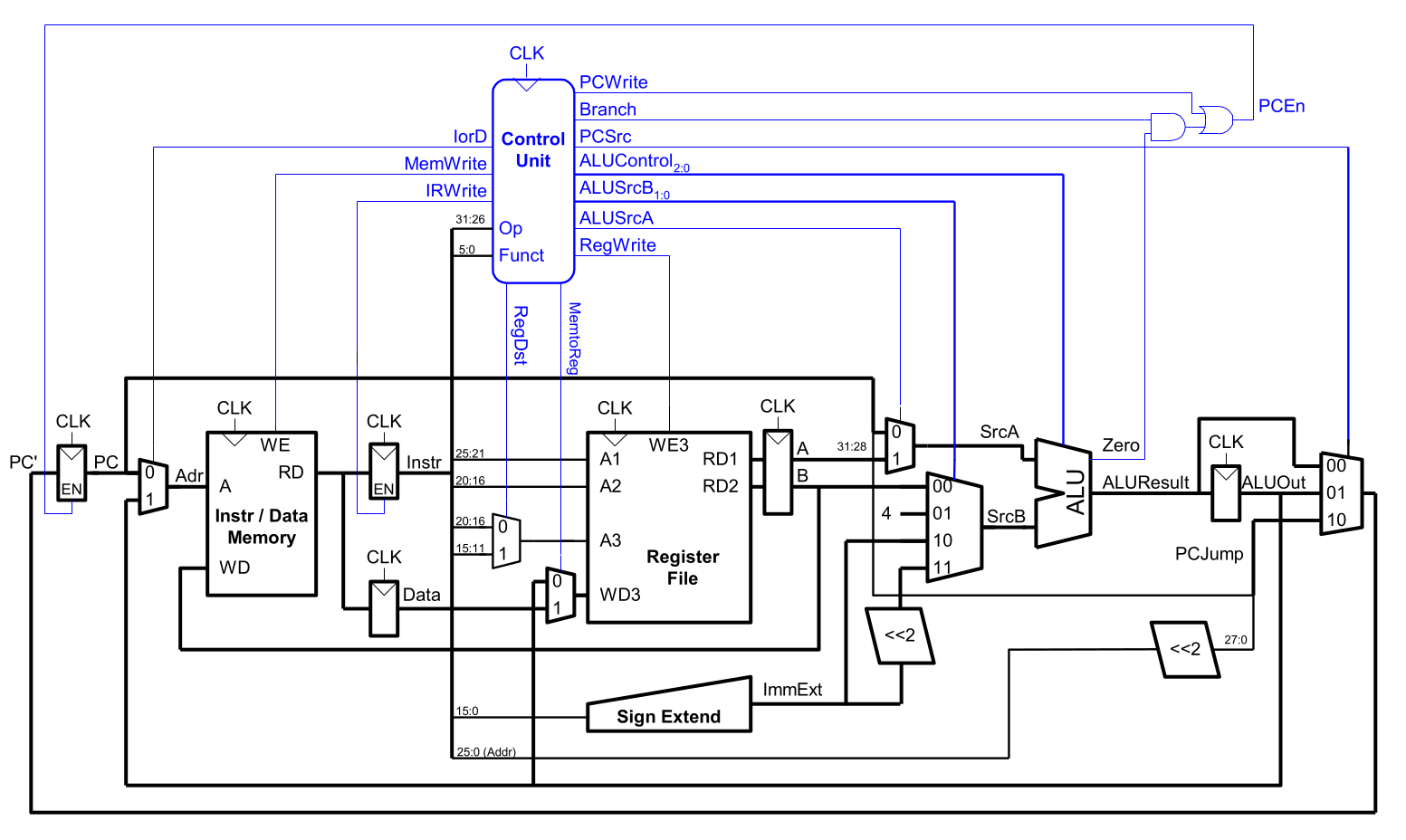
A multi-cycle processor executes one instruction across several clock cycles instead of forcing all work into one long cycle. It is a basic microarchitectural design that reduces the amount of work done in each cycle and allows hardware resources to be reused.
Typical execution phases
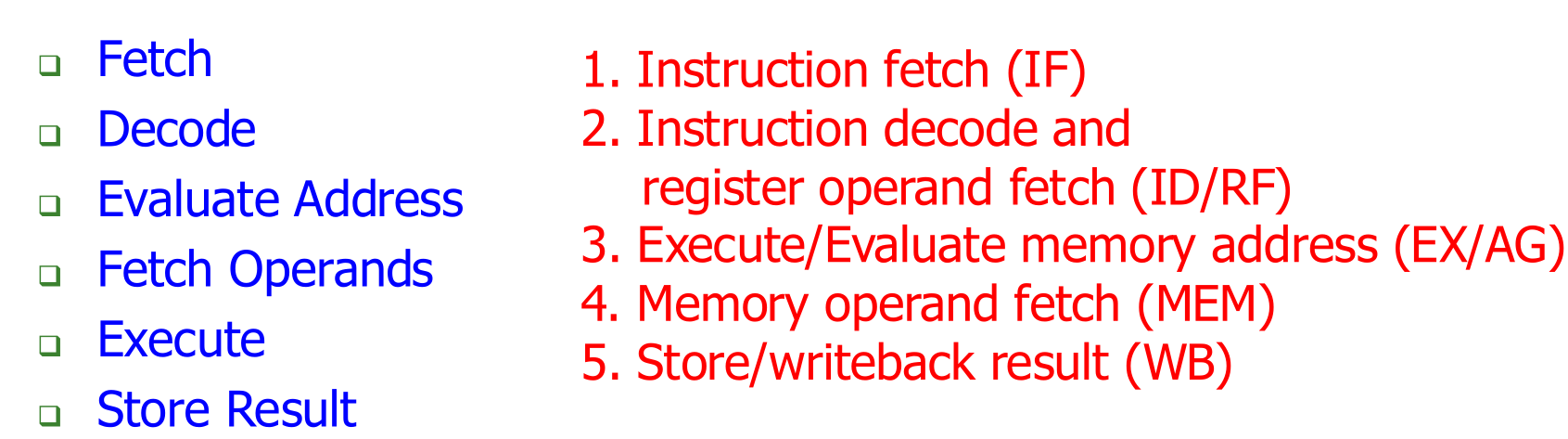
A multi-cycle processor often breaks instruction execution into phases such as:
- instruction fetch
- instruction decode and register read
- ALU operation or address calculation
- data memory access when needed
- register writeback when needed
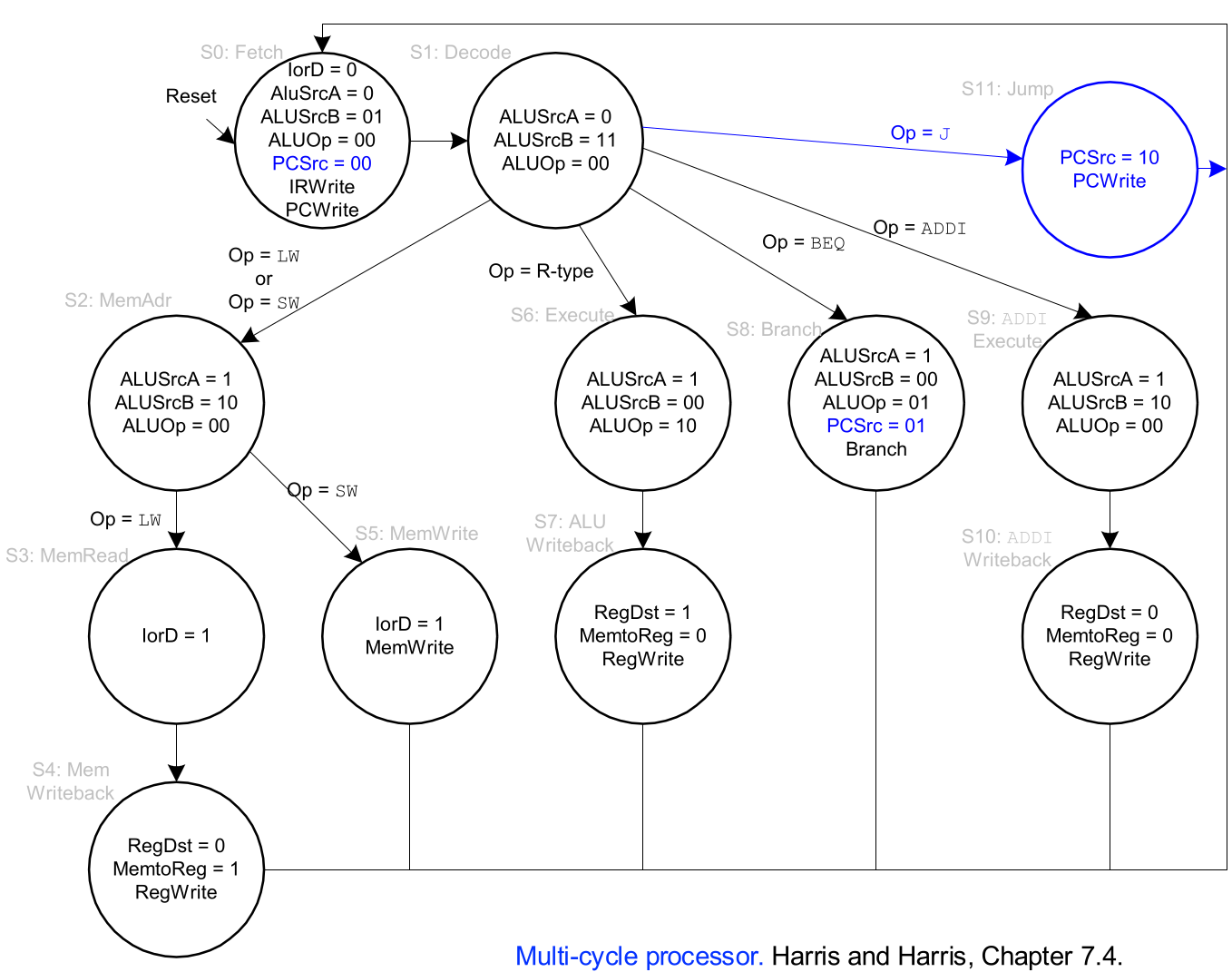
 Not every instruction uses every phase.
The controller activates only the steps required for the current instruction.
Not every instruction uses every phase.
The controller activates only the steps required for the current instruction.
Datapath and control
Because execution is spread across multiple cycles, the processor needs internal state to hold intermediate results between phases.
The control logic is usually implemented as a Finite State Machine.
Why it is useful
- the clock period can be shorter because each cycle contains less combinational logic
- hardware blocks such as the ALU and memory interface can be reused across phases
- instructions with different amounts of work can naturally take different numbers of cycles
Difference to single-cycle architecture
| Aspect | Multi-cycle processor | Single-cycle architecture |
|---|---|---|
| Instruction length | One instruction may take several cycles | Every instruction finishes in one cycle |
| Clock period | Shorter, because each cycle does less work | Longer, because it must fit the slowest instruction |
| CPI | Usually greater than 1 and depends on the instruction | Usually 1 |
| Hardware usage | Reuses functional units across cycles | Often needs less sharing and a longer datapath |
Not the same as pipelining
A multi-cycle processor spreads one instruction over multiple cycles. A pipelined processor overlaps multiple instructions in different stages at the same time. see Pipelining for details